Not Just American
Cindy Nivicela
Oct 06, 2025
What is your family heritage?
I could not respond. I was in 3rd grade when we were introduced to Multicultural Day. It is a day when everyone comes together from a different culture. The teacher gave me a worksheet to fill out. Everyone went to tell each other about their amazing adventures while I was blanked out like my paper. As posters kept on being filled with photos, decoration and more, it felt like everyone knew who they were, while I was lost. When the day came for our project, the table kept on getting filled with dishes or artifacts from the class. Compared to other kids’ posters, mine was plain white saying, “I’m Ecuadorian” and a flag on the top right side of the corner. Everyone spoke and got applause at the end but now it is my turn to present. I felt the eyes staring at me as I walked towards the classroom. I left my poster on the desk. “I’m American.” It felt better for me to say “I’m American” than “I’m Ecuadorian” because if I said “I’m Ecuadorian” there would have been questions, but I would not have an answer.
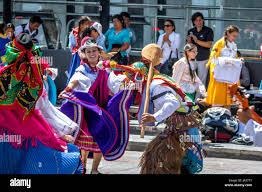
At home, “Ecuador” was only mentioned if it is about a family relative or its corruption caused by money. They always told me to focus on my studies and to fit in with the “American kids.” Until summer, my aunt asked me to come to her dance competition, and I accepted the offer. As we left home, the streets were more cheerful and louder than usual. As we walked toward the train station, I couldn’t help but notice people wearing yellow shirts with an Ecuadorian symbol. People wore clothing that looked so unique and colorful like our sun. The music was playing with a unique drumming rhythm that makes you dance with the beat. She looked at me and smiled, “What is your family heritage?”. The question I wanted to avoid. “I’m American.” The same response I always gave to everyone. She laughed, “no Mija, where are you really from?” Silence. She laughed again, which startled me. “You’re Ecuadorian Mija.” But the Ecuador I knew was “dangerous” because of the corruptive system. “You just see the horrible side of Ecuador and not the beauty of it.” That phrase hit me like a truck. Who would have known I was blinded by the outer layers and could not see the beauty of the inner layers.
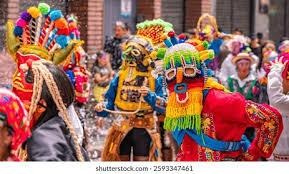
We entered a building, and it felt magical. The aroma of delicious food made my stomach grumble. The clothing was like the one I saw earlier. She told me to wait and watch. The music started and a group of people walked on stage. They are singing a language that I have never heard. They dance so joyfully and move so smoothly and gracefully. They danced their hearts out while the dance tells a story. I did not feel like an outcast. As the music dials down and claps grew louder, everyone cheered while yelling a phrase I have never heard before. I asked my aunt what language everyone was talking, and she told me that it was Quechua, our indigenous language. As every minute passed, I learned current information about my culture. At the end of the day my aunt invited me to her dance group. At first, I was stiff as a doll, but I got the hang of it, and I started to learn to dance Yaravi. I took Spanish classes to connect with my roots.
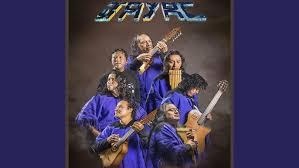
One of the few traditional songs used in dances:(https://soundcloud.com/geo-music-vip-5/zapateando-juyayaybyjayacsi=71f588cdb22b4c28b12ad166f45fbcfd&utm_source=clipboard&utm_medium=text&utm_campaign=social_sharing)
My parents asked why I wanted to learn about Ecuador. My response was “It’s a part of me.” My mom shared her childhood photos and cherished stories of the festival, while my dad noted how the new generation speaks only Spanish, having forgotten Quechua. Just like him since it was essential to survive in America. On the day of my performance for the Inti Raymi festival, I felt nervous. But the moment we started to dance, I felt like a bird just flying around the clear blue sky. Its wings ready to leave that cage and fly towards freedom. I was American by birth but Ecuadorian by heart. Just like that quote “Home is not a place, it’s a feeling,” attributed to author Cecelia Ahern.
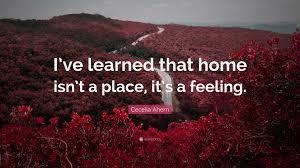
A quote that inspired me during my journey of learning my culture while being born in Queens, NYC. (Written by: Cecelia Ahern)
Looking back, I realize that my experience is like what many people go through when they have 2 different cultures. Many children of immigrants grew up disconnected from their ancestral culture due to distance or loss of connection. At first, I didn’t feel like I belonged in my culture. But currently, I can’t wait to express my home to others. My aunt wasn’t just teaching me how to dance but teaching the history of my ancestors. Now I am a first-year college student and proud to say I am a first-generation Ecuadorian.

